Weather Radios
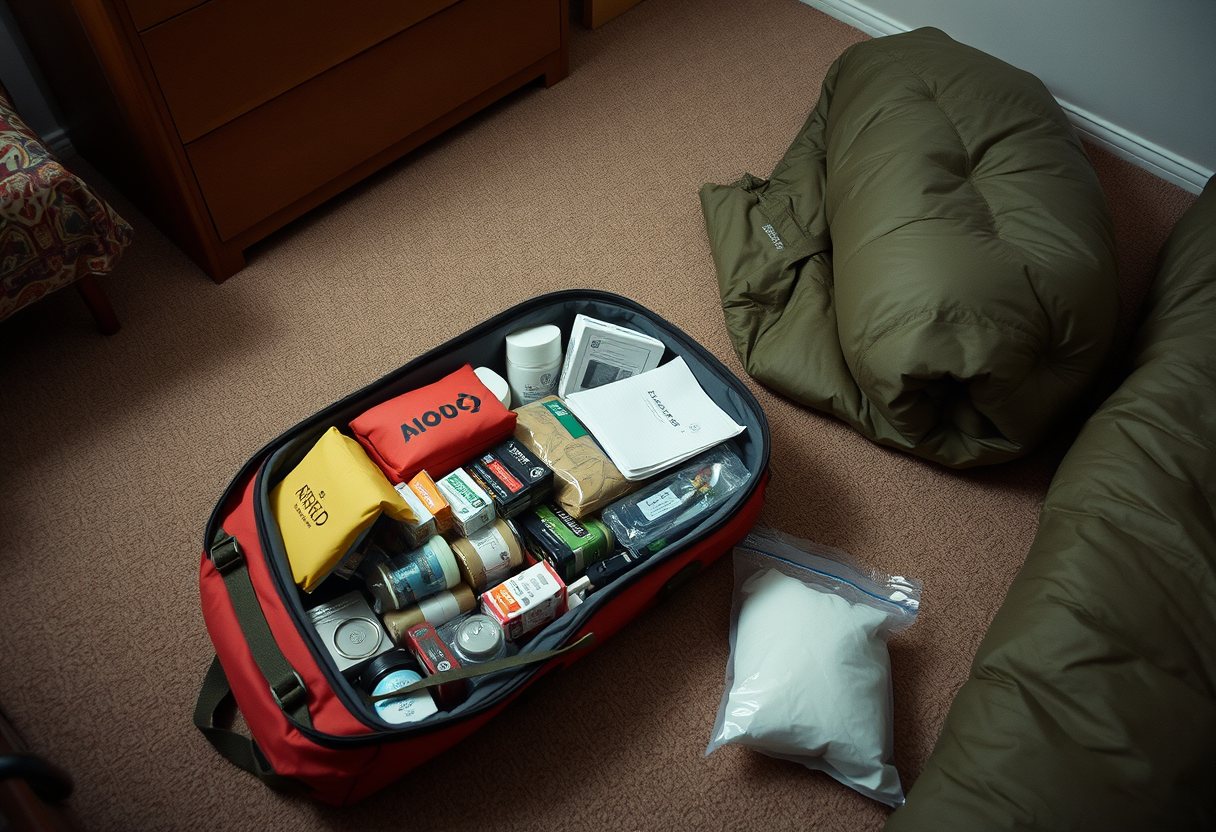
Illustrative photo of this kind of gear — the official product photo loads via Amazon.
RunningSnail NOAA Weather Alert Radio (MD329)
See price on Amazon
Live Amazon pricing connects soon — confirm today's price on Amazon.
As an Amazon Associate I earn from qualifying purchases.
Photo gallery
loads via Amazon API📷
Photo gallery
loads via Amazon API📷
Photo gallery
loads via Amazon API
A weather radio that wakes you up for your own county
Most people who buy a weather radio are not trying to scan the airwaves. They want one specific thing: to be woken up if something dangerous is heading for their address. The RunningSnail MD329 is built for exactly that job. It is a plug-in desktop alert radio that listens to the National Weather Service continuously, and it uses S.A.M.E. — Specific Area Message Encoding — to decide whether a given alert actually applies to you before it makes any noise.
That last part is the whole point. Alerts broadcast on the weather band carry a county code, and a S.A.M.E. radio compares that code against the counties you programmed. Alerts for the next county over get ignored. Alerts for yours get announced. The MD329 supports up to 23 county codes, which is far more than a single household needs — enough to cover your home county plus the counties around a commute, a cabin, or a relative’s house.
How it works
Set-up is the part that trips people up, so it is worth being blunt about it. You look up your county’s six-digit S.A.M.E. code (NOAA publishes them), then enter it with the front-panel knobs. You can run the radio in All Counties, Multiple Counties, or a single-county mode. Single-county mode is the quietest and is what most households actually want; the radio stops reacting to warnings that are not yours.
The radio monitors seven NOAA weather channels across the 162.400–162.550 MHz band and picks up continuous broadcasts, so you can leave it in monitor mode and hear the forecast, or leave it in alert mode and hear nothing until something matters. Beyond weather, the unit ships with more than 80 preset alert types — tornado warnings, floods, but also system messages like low battery — and each of those has its own on/off switch. That granularity is the feature that makes this livable overnight: you can silence the categories that do not concern you and keep the ones that do.
Alerting itself can be a voice announcement, the siren, or a visual signal, and the maximum siren output is listed at 110 dB — loud enough to cut through a closed bedroom door and a running fan. A separate external warning light is included in the box and plugs in away from the radio, so the alert can show up somewhere you will actually see it, on a different floor or at the top of a staircase. An external antenna is included too, which matters if you live in a valley, a basement apartment, or anywhere the built-in whip struggles.
Power is deliberately boring, which is a compliment. The radio runs from a standard 110V wall outlet and takes three AA batteries as backup — the listing puts backup operation at over 54 hours of alert monitoring. It is not a crank radio and it is not solar; it assumes you have electricity most of the time and keeps watching the band when you do not.
Who it's for, and who should skip it
This is the right radio for a household in tornado, flash-flood, or severe-storm country that wants one device sitting on a nightstand or kitchen counter, doing nothing, until it needs to be loud. It also suits anyone who already owns a crank radio for camping and now wants a second unit permanently plugged in at home. Because it is a clock radio as well — backlit display, 12/24-hour time and date, an alarm with a nine-minute snooze — it earns its counter space year-round rather than only during storm season.
Skip it if you want one radio that does everything. The listing specs this unit as a dedicated NOAA weather-band alert radio rather than a general AM/FM receiver, so if you also want to catch local broadcast news during an outage, that is a different model in RunningSnail’s lineup — for example the hand-crank MD-090P linked below. Skip it too if you are not willing to spend ten minutes entering a county code; without programming, a S.A.M.E. radio is mostly a silent box. And if you want light, phone charging, and a crank handle in the same device, this is not that product.
One expectation to set: the AA batteries are not included, and they are backup, not primary power. Treat them as the reason the radio keeps working when the wall goes dead, and replace them once a year the way you would a smoke detector.
Pros
- S.A.M.E. county filtering — program up to 23 county codes so alerts for other areas are ignored
- Seven NOAA weather channels covering the 162.400–162.550 MHz band
- More than 80 preset alert types, each with its own on/off switch
- 110 dB maximum siren output for sleeping households
- Over 54 hours of alert monitoring on AA battery backup
- External antenna and a separate external warning light included in the box
- Backlit display, digital clock, and a snooze alarm — useful when there is no storm
- Knob-based controls for volume, alarm, and siren test
Cons
- County code must be looked up and entered by hand during set-up
- The listing specs this model as a NOAA weather-band radio rather than AM/FM
- AA backup batteries are not included in the box
- Runs on wall power as its primary source; there is no crank or solar charging
- Sound quality is functional rather than pleasant — a monitor, not a music radio
Specs
Specifications below are taken from the product listing and the manufacturer's published product material. Figures we could not verify are not listed.
| Spec | Detail |
|---|---|
| Alerting | S.A.M.E. (Specific Area Message Encoding) with up to 23 county codes; All / Multiple / Single county modes |
| Channels | 7 NOAA weather channels, 162.400–162.550 MHz |
| Alert types | 80+ preset alert types, each individually switchable |
| Siren output | Up to 110 dB |
| Power | 110V AC mains, plus 3×AA battery backup (batteries not included) |
| Backup runtime | Over 54 hours of alert monitoring on battery |
| In the box | External antenna, external warning light |
| Also | Backlit display, 12/24-hour clock and date, alarm with 9-minute snooze |
| Model | MD329 |
| Size | 9.4″ L × 5.7″ W × 2.6″ H |
Frequently asked questions
Do I really need the county code, or can I just leave it on? You can leave it in All Counties mode, but you will hear a lot of alerts that do not apply to you — which is how people end up switching a weather radio off for good. Entering your own county code and leaving the others empty is what makes it worth owning. NOAA publishes the codes free, and it takes a few minutes once.
Is 110 dB actually loud enough to wake me? It is comparable to a smoke alarm at close range, so yes, in a normal bedroom it will wake you. The louder problem is distance: if the radio is in the kitchen and you sleep upstairs with the door shut, use the external warning light as well. That is why a separate warning light is in the box.
What happens during a multi-day outage? The unit falls back to its three AA batteries, and the listing rates that at over 54 hours of alert monitoring. Beyond that, you swap in fresh cells. There is no crank and no solar panel, so a long grid-down event is ultimately a battery-management exercise — keep a pack of AAs with the radio.
Does it also play AM/FM stations? The listing describes this model as a NOAA weather radio rather than a general band receiver, and the tuner is specced for the weather band. If AM/FM plus hand-crank power is what you are after, look at RunningSnail’s crank models instead.
Can I turn off the alerts I do not care about? Yes — that is the strongest part of the design. More than 80 alert types are available and each has its own on/off switch, so you can keep tornado and flood warnings while muting the routine system announcements. One required system alert cannot be disabled.
Verdict
If your goal is to be told, loudly and specifically, when something dangerous is heading for your county, the MD329 does that job with an unusually good set of controls: county-level filtering, seven channels, per-alert switches, a genuinely loud siren, and enough battery backup to cover a long night without power. The trade-offs are honest ones — it needs a wall outlet, it needs you to enter a county code during set-up, and it is not a general-purpose radio.
Buy it as a dedicated home alert radio and keep a crank or solar radio as the camping and grid-down-all-week backup. Check availability and the current price on Amazon: View on Amazon
As an Amazon Associate I earn from qualifying purchases.
Video review
Watch it in action before you buy.
Video: “RunningSnail MD329 Weather Alert Radio Unboxing/Setup” by Landon'sTechno Collectibles on YouTube.
Rate this product
Own it or researched it? Give it a star rating — it helps other readers.
Reader comments & questions
Ask a question or share your experience with this gear.
Leave a comment
Was this review helpful?
Share this review:
You may also like
Midland WR120 NOAA Weather Alert Radio
S.A.M.E. localized alerts for your county — the set-it-and-forget-it home option.
Midland WR400 Deluxe Weather Alert Radio
S.A.M.E. alerts with voice clock and color display.
RunningSnail MD-090P
Solar and hand-crank AM/FM/NOAA radio with 4000 mAh battery, phone charger, flashlight, and reading lamp.
Loading comments…