Survival Kits
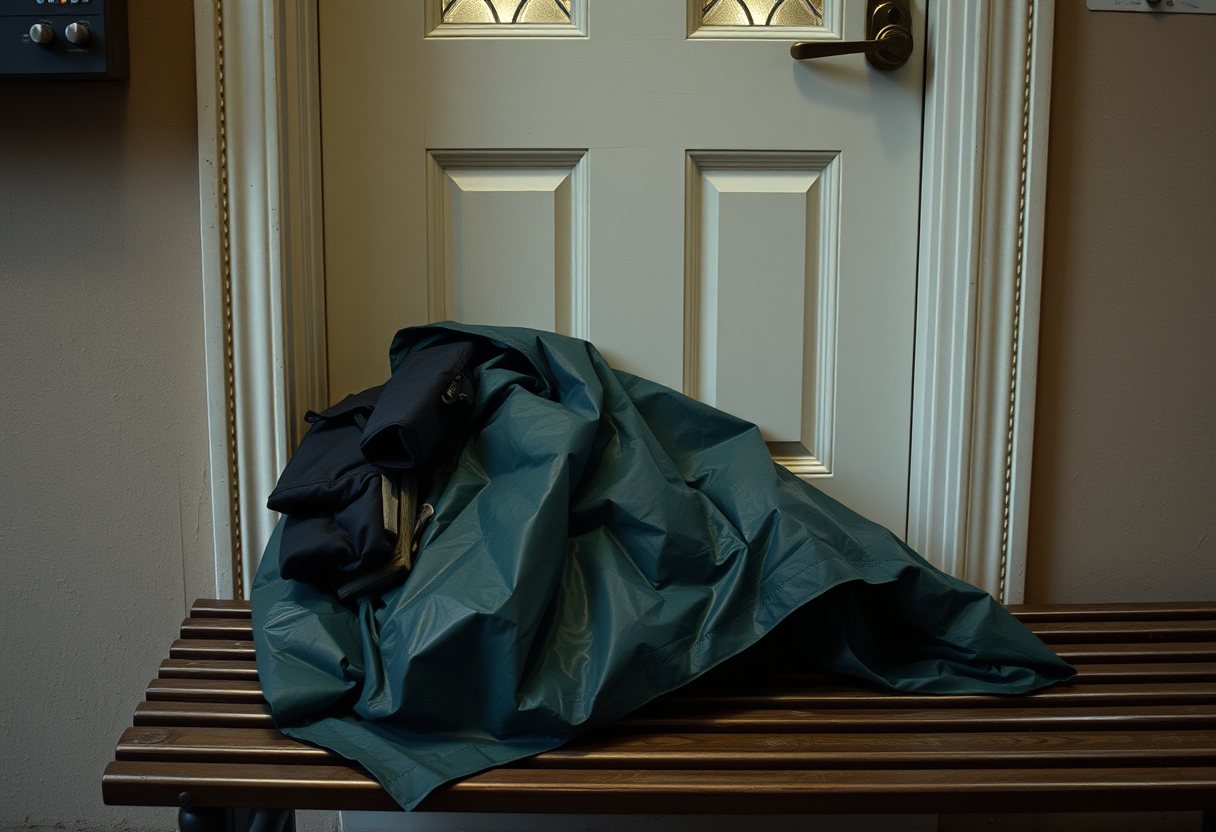
Illustrative photo of this kind of gear — the official product photo loads via Amazon.
PREPARED4X Emergency Mylar Poncho
See price on Amazon
Live Amazon pricing connects soon — confirm today's price on Amazon.
As an Amazon Associate I earn from qualifying purchases.
Photo gallery
loads via Amazon API📷
Photo gallery
loads via Amazon API📷
Photo gallery
loads via Amazon API
The blanket that would not stay on
Mylar blankets are the most-purchased and least-used item in emergency preparation. Everyone has one, almost nobody has worn one in anger, and the reason is that a flat sheet of reflective plastic does not stay on a person. It slips off the shoulders, flaps in the wind that usually accompanies the cold, and forces you to hold it with both hands — which is a problem, because the moment you actually need warmth you also need your hands for a phone, a flashlight, a car door or a map. The PREPARED4X Emergency Mylar Poncho solves the wearing problem rather than the material problem: it is the same reflective mylar idea, cut as a hooded poncho.
That sounds like a small change and it is not. A poncho hangs from your shoulders, leaves both arms free, keeps the reflective layer against your torso and head, and stays put when the wind gets up. The brand calls it a poncho-blanket hybrid, which is a fair description: it retains heat like a blanket while behaving like a piece of clothing, and it folds back down into a zip bag roughly the size of a deck of cards.
How it works
The material is mylar at 26 microns thick, which matters more than any other number here. Ordinary emergency blankets are typically around 12 microns — thin enough that they tear on a branch and loud enough that crumpling them announces your position. Doubling the thickness makes the poncho tougher, quieter, and much more likely to survive a second use. The manufacturer also claims it reflects and retains up to 90% of body heat, which is the standard figure for a properly worn mylar layer: what it is really doing is blocking wind and trapping the warm layer of air your body has already heated. It is not generating warmth, so wear it over clothing — the brand says bare skin works but is far less comfortable and less effective than wearing it over a jacket.
The cut is deliberately generous, and the brand publishes the numbers: 46 inches from the hood to the bottom hem, 49 inches across from sleeve to sleeve, and 34 inches from neck to bottom. That means it drapes over a backpack rather than being trapped under it, which is the common failure of a tight-fitting emergency poncho on a hike. It is also reversible, and which way round you wear it depends on what you need: silver side in to keep your heat, silver side out to be visible to rescuers. It is waterproof and wind-resistant in both orientations, which is what makes it work as a rain layer as well as a warmth layer. Packed, each poncho sits in its own zip bag at about 5 x 3.25 inches, and the orange and green versions weigh roughly 2.5 ounces.
Nobody would claim this is a jacket. It is a single-layer rain shell and heat reflector that you can carry in a pocket and will be genuinely grateful for if the weather turns while you are in hiking clothes. The brand is also honest about service life: they describe the material as durable, and say most customers get at least two uses out of one poncho if it is folded up afterwards, but in rough conditions it is used once. Treat it as consumable emergency gear: buying several is normal rather than excessive, and owning more than one is the point.
Who it's for, and who should skip it
Buy it if you spend time outdoors in places where weather changes faster than your clothing does, or if you want a warmth and rain layer in a car kit, a hiking pack or a bug-out bag without adding weight or bulk. Skiers, hikers, dog walkers, festival-goers and anyone commuting through winter weather all have a version of the same exposure problem. It is also the piece of a kit most likely to be handed to someone else — a passenger left in a cold car, a child who got soaked — which is why buying a multi-pack is more useful than buying one.
Skip it if you expect a durable, reusable raincoat. This is an emergency layer: it does not breathe, so if you wear it while exerting yourself you will get damp from the inside, and it will not survive being stuffed into a pack over and over the way a nylon shell will. If you want something you will actually wear on wet days by choice, buy a proper lightweight rain jacket and put this in the kit for the day the jacket is not there.
Skip it too if your main risk is heat, not cold. Mylar works by reflecting radiated heat, so in hot conditions it does nothing useful and a reflective layer in direct sun is the opposite of a comfort item. And if your emergency plan is built around sheltering at home, a poncho adds little: it is outdoor, mobile, on-your-person gear. Its value is highest for the person who might end up standing outside in bad weather, which is exactly why it belongs in the car and the day pack rather than the garage shelf.
Pros
- Hooded poncho shape keeps your hands free and stays on in wind, unlike a flat mylar blanket
- 26-micron mylar — about twice the thickness of typical emergency blankets, so it tears and rustles less
- Maker rates heat retention at up to 90% of body heat when worn as a layer
- Waterproof and wind-resistant, so it covers rain and wind as well as cold
- Roomy enough to wear over a backpack: about 46 in hood-to-hem and 49 in sleeve-to-sleeve
- Packs to roughly 5 x 3.25 in and about 2.5 oz, so it disappears into a pocket, glovebox or day pack
Cons
- Not breathable, so heavy exertion will leave you damp inside it
- Designed as emergency gear — the maker expects about two uses in good conditions, one in rough weather
- It reflects heat rather than producing it, so it adds little over bare skin without a clothing layer
- Sold in multi-packs, so check the listing to see how many ponchos you are actually getting
- Useless for heat or sun, and no substitute for a real rain jacket if you want daily wear
Specs
Verified from the maker's own listings, manuals and product pages; anything we could not confirm we have left out rather than guess at.
| Spec | Detail |
|---|---|
| Brand | PREPARED4X |
| Product | Emergency Mylar Poncho with hood |
| Material | 26-micron mylar — roughly twice the thickness of standard 12-micron emergency blankets |
| Heat retention | Up to about 90% of body heat, per the manufacturer |
| Weather resistance | Waterproof and wind-resistant; reversible |
| Open size | 46 in hood to hem, 49 in sleeve to sleeve, 34 in neck to hem |
| Packed size | About 5 x 3.25 in, individually bagged |
| Weight | About 2.5 oz (orange/green); 3.5 oz for grey camo |
| Reusability | Maker expects at least two uses with care; single-use in rough conditions |
| Wearing tip | Silver side in to retain heat, silver side out to be more visible |
| Pack size | Sold in multi-packs — check the listing for the current pack count |
| Best for | Cold, wet emergencies where you are outside and need your hands free |
Frequently asked questions
How warm is it, really? It does not make heat — it traps the heat you are already producing and blocks the wind that would take it away. The maker's figure is up to 90% of body heat retained, and that holds best when you wear it over clothing. Worn on bare skin it will still help, but it feels cold and clammy and works noticeably less well.
Can I wear it over a backpack? Yes, and that is one of its real advantages over a standard poncho. The published cut is 46 inches from hood to hem and 49 inches sleeve to sleeve, which is roomy enough to drape over a daypack and still cover your torso.
How many times can I use one poncho? PREPARED4X says the thicker mylar means most people get at least two uses if they fold it back up, and that in harsher conditions it is a one-use item. The safe assumption for a kit is one use — which is the argument for buying a multi-pack and storing one everywhere you might need it.
Is it worth carrying if I already have a rain jacket? As a backup, yes — it weighs a couple of ounces and packs to the size of a card deck, so it lives in the car or the bottom of a pack without being noticed. It is at its best on the day you left the jacket at home, or for someone else who did.
Verdict
The PREPARED4X Emergency Mylar Poncho fixes the reason most mylar blankets never get used: it stays on. Thicker material, a hood, real coverage over a backpack, and a packed size you can forget about. Buy a pack of them, put one in every car and pack, and stop relying on a flat sheet you would have to hold in both hands. View on Amazon
Video review
Watch it in action before you buy.
Video: “PREPARED4X Emergency Mylar Poncho Review | Best Survival Rain Poncho for Hiking & Emergency Kits” by Smart Product Picks on YouTube.
Rate this product
Own it or researched it? Give it a star rating — it helps other readers.
Reader comments & questions
Ask a question or share your experience with this gear.
Leave a comment
Was this review helpful?
Share this review:
You may also like
Stealth Angel 2 Person Tan 72 Hour Emergency Kit
A two-person 72-hour kit with shelter and warmth layers already included.
First My Family 72-Hour Bug Out Bag
A family-oriented bug-out bag built around three days of self-sufficiency.
Emergency Zone Urban Survival Bug Out Bag
An urban-focused bug-out bag for people who may have to leave on foot.
Loading comments…