Weather Radios
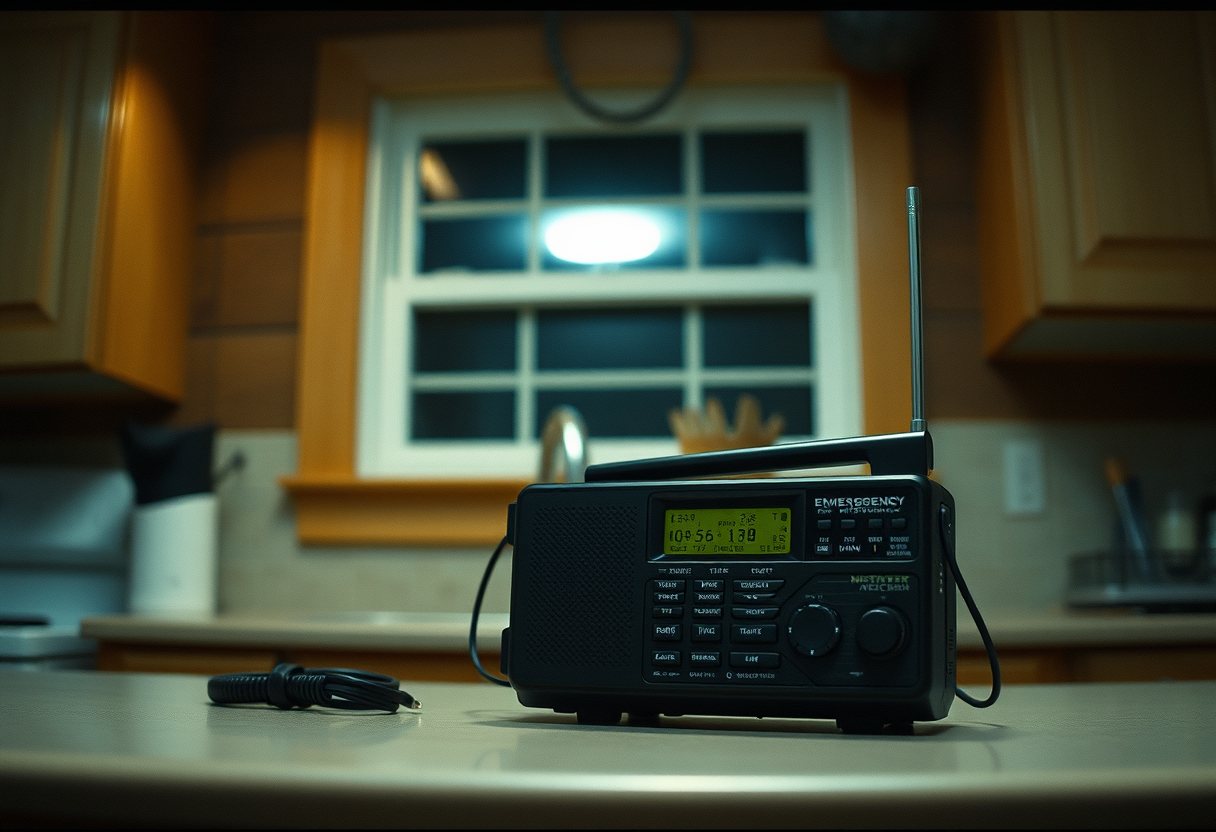
Illustrative photo of this kind of gear — the official product photo loads via Amazon.
Midland WR300 Deluxe NOAA Weather Alert Radio
See price on Amazon
Live Amazon pricing connects soon — confirm today's price on Amazon.
As an Amazon Associate I earn from qualifying purchases.
Photo gallery
loads via Amazon API📷
Photo gallery
loads via Amazon API📷
Photo gallery
loads via Amazon API
The classic bedside alert radio
Before the WR400 existed, there was the WR300 — Midland's long-running S.A.M.E. weather alert radio for the nightstand. It remains a strong pick for one reason: it's a louder, more expandable alerter than its successor. The 90 dB siren is the loudest in Midland's home lineup, and the external alert and antenna ports let you hook up strobe lights, bed shakers, or an outdoor antenna. If the WR400 is the refined modern pick, the WR300 is the workhorse.
Serious alerting, minimal fuss
The WR300 receives AM, FM, and all seven NOAA weather channels (162.400–162.55 MHz), with S.A.M.E. programming for up to 23 county codes per Midland's comparison table. More than 80 emergency alert types can be individually enabled or disabled, the last 10 alerts are stored in memory, and the radio auto-switches from AM/FM listening to any incoming all-hazard alert. The blue backlit LCD shows the clock, alert type, watch/warning/advisory status, signal strength, and power icons at a glance.
When a warning fires, the 90 dB siren gets your attention — noticeably louder than the WR400's 85 dB. The external alert output is the standout feature here: connect flashing lights or other alert accessories for hearing-impaired household members, and the external antenna jack lets you improve reception in fringe areas. An alarm clock with snooze rounds out the bedside duties.
Power and what's in the box
The WR300 runs primarily on the included AC adapter (9–14 V DC input), with four AA batteries as automatic backup during outages. The clock and programmed memory are retained on battery power, so a blackout doesn't wipe your settings. The box includes the radio, AC power adapter, and owner's manual, with a one-year limited warranty.
Who it's for, and who should skip it
The WR300 fits households that want the loudest possible alert and room to expand — especially homes with hearing-impaired members who benefit from the external alert output, or rural locations where an external antenna helps. It's also the pick if you simply prefer the proven older design.
Skip it if you want to charge a phone during an outage — there's no USB port here, so step up to the WR400. And like its sibling, this is a tabletop AC-powered unit: no crank, no solar, no flashlight, no Bluetooth.
Pros
- 90 dB siren — the loudest in Midland's home alert lineup
- External alert output for strobes/shakers plus external antenna jack
- S.A.M.E. with 23 programmable locations and 80+ selectable alert types
- 10-alert memory; auto-switches from AM/FM to incoming alerts
- Clock and settings retained on AA battery backup during outages
Cons
- No USB charging port (the WR400 has one)
- No flashlight, no Bluetooth, no crank or solar — tabletop only
- Single alarm clock vs the WR400's dual alarm
- Unit weight isn't published by the manufacturer, and third-party figures are unreliable
Specs
| Spec | Detail |
|---|---|
| Radio bands | AM, FM, 7 NOAA weather channels (162.400–162.55 MHz) |
| Alerts | S.A.M.E., 23 programmable locations, 80+ alert types |
| Siren | 90 dB |
| Alert memory | Stores last 10 received alerts |
| Display | Blue backlit LCD |
| Power | AC adapter (included); 4x AA battery backup (not included) |
| Alarm clock | Yes, with snooze |
| Ports | External alert output, external antenna jack |
| Size | 7.0 x 5.5 x 2.25 in |
| Best for | Loud bedside alerting with expansion options |
Frequently asked questions
WR300 or WR400 — which should I buy? Pick the WR300 for the louder 90 dB siren and external alert/antenna ports. Pick the WR400 for USB phone charging, a dual alarm, and color-coded severity indicators. Both share the same S.A.M.E. core and footprint.
Does it work during a power outage? Yes — four AA batteries take over automatically, and the clock and programmed counties are retained on backup power.
Can I connect a strobe light or bed shaker? That's exactly what the external alert output is for. It's the main reason to choose the WR300 over the WR400 if anyone in the household is hearing-impaired.
Is there a phone app or subscription? No. NOAA weather broadcasts are free over-the-air radio — no subscription, no app, no account needed.
Verdict
The WR300 remains the loudest, most expandable bedside alert radio Midland makes. If the priority is waking a deep sleeper or wiring in visual alert accessories, its 90 dB siren and external ports beat the newer WR400 — just know you're giving up USB charging to get them. Check the current price on Amazon: View on Amazon
As an Amazon Associate I earn from qualifying purchases.
Video review
Watch it in action before you buy.
Video: “Midland WR300 NOAA Weather Alert Radio — video review” by on YouTube.
Rate this product
Own it or researched it? Give it a star rating — it helps other readers.
Reader comments & questions
Ask a question or share your experience with this gear.
Leave a comment
Was this review helpful?
Share this review:
You may also like
Midland ER310 Emergency Weather Radio
Hand crank, solar, NOAA alerts, flashlight, and phone charging in one rugged unit.
Midland ER310 Pro Emergency Radio
The ER310 upgraded: Bluetooth streaming plus a 10,000 mAh power bank.
Midland WR120 NOAA Weather Alert Radio
S.A.M.E. localized alerts for your county — the set-it-and-forget-it home option.
Loading comments…