Weather Radios
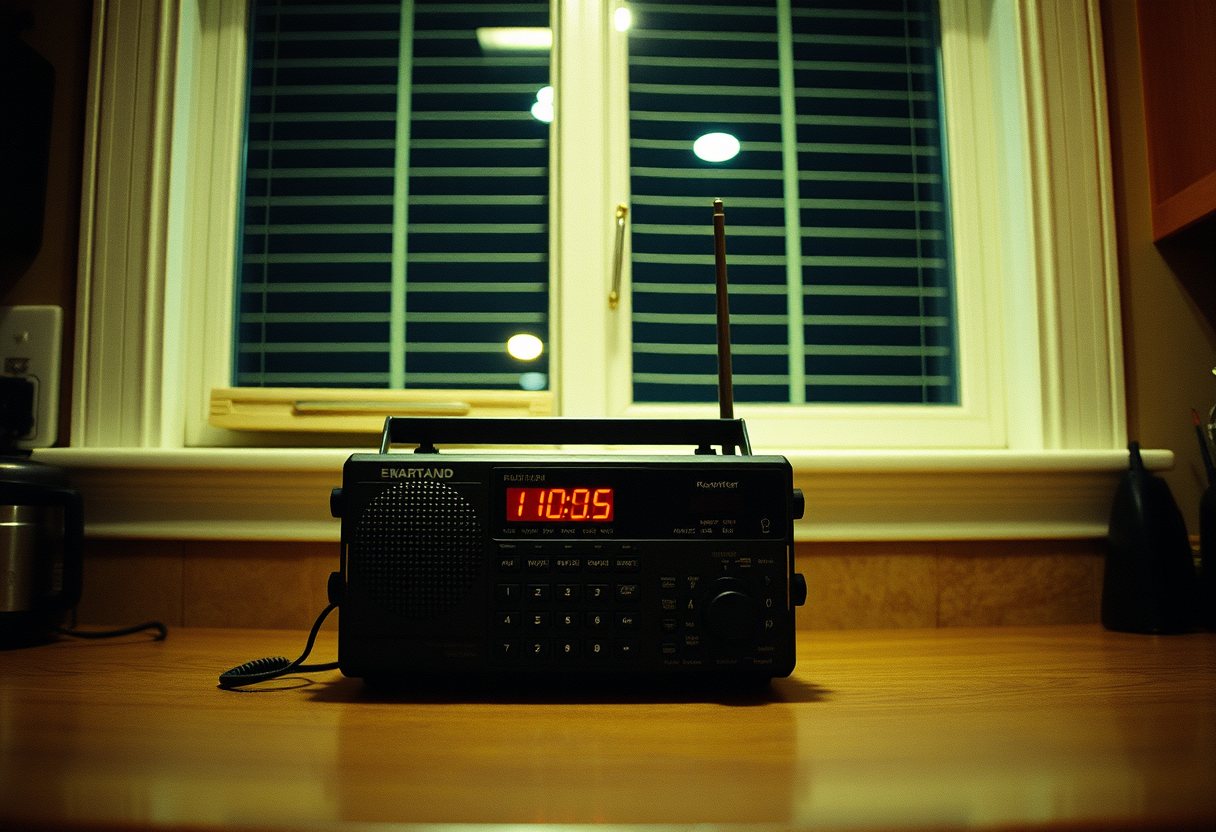
Illustrative photo of this kind of gear — the official product photo loads via Amazon.
Kaito KA600 Emergency Radio
See price on Amazon
Live Amazon pricing connects soon — confirm today's price on Amazon.
As an Amazon Associate I earn from qualifying purchases.
Photo gallery
loads via Amazon API📷
Photo gallery
loads via Amazon API📷
Photo gallery
loads via Amazon API
The shortwave listener's emergency radio
Most emergency radios stop at AM, FM, and NOAA weather bands. The Kaito KA600 Voyager Pro keeps going: longwave, full shortwave from 2.3 to 23 MHz, and 335 memory presets for stashing every station you care about. If you want a radio that can pull in international broadcasts and ham-adjacent chatter when local infrastructure is down, this is the one in our lineup that does it.
Six ways to power it
The KA600's party trick is power flexibility: hand crank generator, tilting solar panel, three AA batteries, 5V USB input, an optional AC adapter, and the built-in rechargeable NiMH battery pack. Few radios offer this many fallbacks. The USB output turns the radio into an emergency phone charger, and the 180-degree adjustable solar panel angles toward the sun for better trickle charging.
A radio that doubles as a field station
The feature list reads like a much more expensive receiver: direct keypad entry for punching in exact frequencies, four tuning methods (manual, keypad, auto-scan, memory), RDS station info on FM, a NOAA all-hazards alert mode, dual back-lit LCDs, a thermometer and humidity gauge, dual alarm clocks, a sleep timer, and a calendar. The 5-LED reading lamp on the solar panel and the LED flashlight with red SOS beacon cover lighting, and an aux input plus headphone jack round out the audio options. At roughly 9.5 x 5.5 x 2.5 inches and about a pound, it's a tabletop device, not a pocket one.
Who it's for, and who should skip it
The KA600 suits radio enthusiasts, travelers, and serious preppers who value shortwave access and granular tuning. If you enjoy actually listening to radio — not just owning an emergency gadget — this is the most radio for the money here.
Skip it if you want grab-and-go simplicity. The KA600 has a learning curve, and its size and weight make it a base-camp device. For a simpler crank radio, the Midland ER210 or ER40 gets you alerts and power with far less fuss.
Pros
- Full shortwave (2.3–23 MHz) plus longwave, AM, FM, and 7 NOAA channels
- Six power sources including crank, solar, AA, and USB
- Direct keypad entry and 335 station memories
- NOAA all-hazards alert mode with RDS
- Thermometer, humidity gauge, dual alarms, sleep timer
- 5-LED reading lamp, flashlight, and red SOS beacon
- USB output for emergency phone charging
Cons
- Larger and heavier than typical emergency radios (~1 lb)
- More complex to operate — not a hand-it-to-grandma device
- NiMH battery pack is older tech next to modern lithium cells
- AC adapter sold separately
Specs
| Spec | Detail | |------|--------| | Radio bands | AM 520–1710 kHz, FM 87–108 MHz (RDS), LW 150–521 kHz, SW 2.3–23 MHz, 7 NOAA channels | | Alerts | NOAA all-hazards alert | | Tuning | Manual, direct keypad, auto-scan, memory (335 presets) | | Power | Hand crank, solar, 3x AA, 5V USB in, AC adapter (optional), NiMH pack | | Phone charging | Yes, 5V USB output | | Light | 5-LED reading lamp, LED flashlight, red SOS beacon | | Display | Dual back-lit LCD with clock, calendar, temp/humidity | | Size / weight | ~9.5 x 5.5 x 2.5 in; ~1 lb | | Best for | Shortwave listeners, travelers, and serious preparedness kits |
Frequently asked questions
Do I need shortwave? Not for basic emergency alerts — NOAA covers that. Shortwave matters if you want international broadcasts and long-distance listening when local stations are down. It's a hobbyist and prepper feature, and the KA600 is the affordable way to get it.
How do I tune a specific frequency? Use the direct keypad entry — punch in the exact frequency, which is far faster than spinning through bands. You can store up to 335 stations in memory.
Can it run on regular batteries? Yes. Beyond the crank, solar, and USB, it takes three AA batteries, so a drawer full of AAs is a legitimate backup plan.
Is it hard to use? There's a learning curve. The basics (power, volume, band switching) are straightforward, but the alarms, timers, and memory system reward a read-through of the manual.
Verdict
The KA600 is the enthusiast's pick: no other radio in this lineup offers shortwave, keypad tuning, and six power sources at anything close to this level. It's bigger and more complex than a grab-and-go emergency radio, but if you want maximum listening capability when it matters, this is it. Check the current price on Amazon: View on Amazon
As an Amazon Associate I earn from qualifying purchases.
Video review
Our video review for this product is in production — check back soon.
Rate this product
Own it or researched it? Give it a star rating — it helps other readers.
Reader comments & questions
Ask a question or share your experience with this gear.
Leave a comment
Was this review helpful?
Share this review:
You may also like
Midland ER310 Emergency Weather Radio
Hand crank, solar, NOAA alerts, flashlight, and phone charging in one rugged unit.
Midland ER310 Pro Emergency Radio
The ER310 upgraded: Bluetooth streaming plus a 10,000 mAh power bank.
Midland WR120 NOAA Weather Alert Radio
S.A.M.E. localized alerts for your county — the set-it-and-forget-it home option.
Loading comments…